Business Name: BeeHive Homes of Andrews
Address: 2512 NW Mustang Dr, Andrews, TX 79714
Phone: (432) 217-0123
BeeHive Homes of Andrews
Beehive Homes of Andrews assisted living care is ideal for those who value their independence but require help with some of the activities of daily living. Residents enjoy 24-hour support, private bedrooms with baths, medication monitoring, home-cooked meals, housekeeping and laundry services, social activities and outings, and daily physical and mental exercise opportunities. Beehive Homes memory care services accommodates the growing number of seniors affected by memory loss and dementia. Beehive Homes offers respite (short-term) care for your loved one should the need arise. Whether help is needed after a surgery or illness, for vacation coverage, or just a break from the routine, respite care provides you peace of mind for any length of stay.
2512 NW Mustang Dr, Andrews, TX 79714
Business Hours
Monday thru Sunday: 9:00am to 5:00pm
Facebook: https://www.facebook.com/BeeHiveHomesofAndrews
YouTube: https://www.youtube.com/@WelcomeHomeBeeHiveHomes
Families generally begin looking at memory care after a crisis. A roaming occurrence. A kitchen fire that might have been worse. A fall that exposed just just how much confusion has crept in. By the time you are comparing cottage-style homes to large locked systems, you are already carrying a heavy mix of regret, seriousness, and exhaustion.
Having worked in senior care settings of both kinds, I have actually seen families agonize over this same decision. There is no universal "right response". There is just the very best suitable for this specific person, in this particular season of their disease, with this particular family supporting them.
This post looks carefully at the trade-offs in between small, intimate cottage-style memory care homes and bigger, traditional guaranteed systems, frequently part of a huge assisted living or continuing care campus. The objective is not to crown a winner, however to give you a reasonable lens so you can choose that you can deal with, mentally and practically.
What "cottage-style" and "large locked unit" generally mean
The terms sound instinctive, but in practice they cover a variety of setups. It helps to understand what you are most likely to see when you tour.
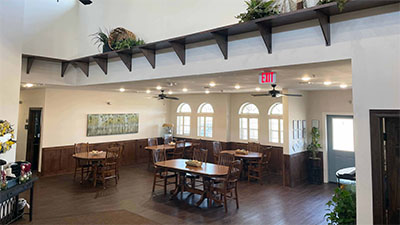
Cottage-style memory care is typically a little home-like setting, typically with 8 to 20 citizens. It might be a standalone home in a residential community or a cluster of small houses on a larger senior care school. Common features include a shared cooking area and living-room, easy access to a protected backyard or garden, and personnel who drift in between a little number of residents.
Larger locked systems, frequently called protected memory care or dementia units, are normally part of a larger assisted living, nursing home, or senior care neighborhood. The memory care floor or wing might house 25 to 60 residents, sometimes more. There are normally typical dining-room, activity areas, and often specialized areas like snoezelen spaces or "memory lanes" with nostalgic décor. Doors in and out of the unit are locked or alarmed, and residents can not leave unescorted.
Within both categories, quality differs drastically. A well-run large unit can feel calmer and more dignified than an inadequately run home, and vice versa. Structure alone does not ensure great care, but it does form what is possible.
The psychological weight behind the choice
Families seldom decide in between these choices on spreadsheets alone. The decision is tangled up with hopes and fears.
Cottage-style homes typically resonate mentally with adult children who want something that feels closer to "home" than "facility". They picture their loved one sitting at a cooking area table, smelling lunch cooking, enjoying birds in the backyard. For somebody who constantly valued intimacy, privacy, and familiar regimens, that image can feel like a lifeline.
Large locked units can feel frightening at first glance, particularly if a tour lands at a hectic time, with numerous citizens in distress. Yet some families draw convenience from the structure, the presence of nurses on-site, and the noticeable systems: medication carts, call lights, detailed care strategies. For those who fear medical crises, falls, or behavioral escalation, this environment can feel safer.
Underneath, there is a different tension. Some relatives focus on a home-like atmosphere even if it means less bells and whistles. Others prioritize clinical backup and depth of staffing even if it implies a more institutional visual. Understanding which fear is louder for you helps clarify your path.
How stage of illness affects the best setting
The same person might thrive in a home setting at one phase of dementia and need a larger locked system at a later stage. When we disregard disease progression, we often put individuals in settings that will work for a short while, then fail abruptly.
Early to mid-stage dementia, especially when the individual is still ambulatory and socially engaged, can be an excellent fit for cottage-style homes. In that phase, familiarity and regular matter a lot. The ability to stroll a small, foreseeable circuit - bed room, cooking area, patio, garden - lowers stress and anxiety. Homeowners often take part in easy home activities: folding laundry, setting the table, watering plants. These little jobs provide structure and preserve dignity.
Mid to later stages, particularly when behavioral symptoms are strong, can tilt the balance. Frequent agitation, exit-seeking, or complex medical co-morbidities need personnel who are both numerous and deeply trained. Bigger units, connected into the broader assisted living or proficient nursing facilities, typically have on-site nurses all the time, ready access to checking out doctors, and developed protocols for psychiatric assistance. Not all do, but the organizational scale makes these supports more likely.
Severe, end-stage dementia provides another angle. By this stage, mobility might be restricted, and medical requirements tend to dominate. Some cottage homes partner with hospice and do this perfectly, prioritizing comfort, touch, and mild presence. Others struggle due to the fact that they lack 24-hour nursing, and households deal with regular hospital transfers. A larger, scientifically focused memory care or nursing home system may manage end-of-life signs more smoothly, if it is well staffed and communication is strong.
The practical question to ask yourself is not simply senior care "where is my mother right now" but "how will this setting manage her if she decreases one or two notches".
Safety, flexibility, and the issue of locked doors
Both little cottages and big units are protected by style, however how that security feels to the resident can differ.
In a cottage, safe and secure perimeters are often less apparent. A fenced backyard with a locked gate, doors with keypad codes, and alarmed exits can all blend into a residential exterior. Locals may wander easily within your house and garden without constantly coming across locked doors. This works well for individuals who roam however are otherwise constant on their feet and not aggressive. I have actually seen many homeowners stroll the same garden course lots of times in a day, content in the repetition.
In a large locked unit, security is more noticeably main. Entryway and exit doors are normally popular, with keypad entries that personnel and visitors utilize throughout the day. Corridors may be long, and locals who roam can cover a lot of ground. For some, this provides a sense of area and range: various lounges, activity areas, and dining rooms to check out. For others, particularly those who become distressed by closed doors, the constant suggestion that they can not leave amplifies agitation.

When you tour, do not just ask "is it safe". Watch how people move. Do residents appear relaxed in the area, or do they cluster at doors, trying to exit? Exist safe strolling courses inside your home and out? For someone who has actually constantly needed to be physically active, the ability to walk without being stopped every few feet matters profoundly.

Staffing truths behind the brochures
Brochures highlight staff ratios, however they seldom tell the entire story. As somebody who has actually arranged and supervised care teams, I pay more attention to patterns of work than to any single number.
Cottage-style homes frequently advertise low staff-to-resident ratios. With, say, 10 residents and 2 caretakers on task, the math looks beneficial. Those caretakers usually do everything: personal care, meal prep, light housekeeping, activities, and household interaction. When the group is well trained and steady, the connection can be outstanding. Staff truly do know each resident's rhythms, triggers, and histories. Small groups likewise suggest modifications in behavior are seen quickly.
The fragility of that model appears when someone calls out ill or when there is a resident with really high requirements. A single person up all night, another who requires two-person transfers, and suddenly that cozy ratio feels thin. Burnout threat is real, since personnel carry psychological in addition to physical labor in close quarters.
Larger locked units more frequently different roles. There may be caretakers dedicated to individual care, activity personnel running programs, dining personnel handling meals, and nurses overseeing medications and medical requirements. Ratios can be less beneficial on paper, particularly during the night, however there are more layers of backup. If one caregiver is tied up with an extended shower, another can typically respond to a fall alarm. If somebody's habits escalates, a nurse can step in, change medications, or call the physician.
Neither design is immediately much better. The essential concerns have to do with consistency, training, and leadership. Do staff stay enough time to understand residents well, or is there consistent turnover? Have caregivers received particular dementia and behavioral training, or just generic orientation? When personnel are overwhelmed, what supports exist for them?
The feel of daily life: noise, routine, and meaning
Environment and regular shape quality of life as much as any medical care.
Cottage-style memory care generally offers a quieter sensory environment. Fewer individuals, less overhead paging, fewer carts moving. Meals may be prepared in an open cooking area where residents can smell coffee and soup. The day's activities often flow around ordinary home tasks: arranging linens, baking, gardening, seeing a favorite video game show together. For somebody easily overstimulated, or for a spouse who wants visits to feel individual and relaxed, this rhythm can be ideal.
Large locked systems use more official programming. There may be a published activity calendar, going to performers, exercise classes, religious services, and specialized dementia-friendly offerings. The scale enables range: one resident might sign up with a music session while another chooses a quieter art group in a side room. Families who want abundant structured engagement often appreciate this. On the other hand, more bodies in one area mean more sound, more disruptions, and more potential for conflicts between residents.
One quiet information to observe on any tour: what occurs between scheduled activities. Do locals sit unengaged in front of a tv for hours, no matter setting size? Or do staff weave small interactions into the gaps - providing hand massages, browsing photo albums, bringing someone to the window to see birds? The very best memory care, home or large unit, focuses less on big events and more on these little, repetitive minutes of connection.
Medical oversight and complex needs
As dementia progresses, other health conditions seldom time out. Cardiac arrest, diabetes, COPD, persistent pain, and psychiatric histories stroll in the door with your loved one. The ability of a memory care setting to manage these conditions safely typically depends more on medical infrastructure than on structure style.
Cottage homes are usually accredited as assisted living or residential care, not nursing homes. That suggests restricted medical procedures are enabled on-site, and checking out nurses or hospice teams manage more specific care. For relatively stable elders, this works well. For those with frequent exacerbations, laboratory requirements, or complex medication regimens, the cottage design can be strained.
Larger locked systems within an assisted living or knowledgeable nursing campus typically have nurses on-site 24 hours, with more powerful ties to speaking with doctors, laboratories, and pharmacies. It may be simpler to change medications quickly, catch infections early, and prevent unnecessary hospitalizations. Not all large systems have this level of integration, however many do, particularly those marketed as higher acuity memory care.
If your loved one has significant medical fragility or a history of behavioral crises requiring psychiatric support, ask in-depth questions about how each setting deals with such situations. Does the cottage partner with a home health or psychiatric service? Does the big unit have standing procedures for quick intervention that do not default to calling 911?
Cost, value, and what you are really paying for
Families often presume cottage-style homes are constantly more pricey. In practice, both designs can range extensively depending upon region, features, and staffing.
Cottage-style memory care tends to bundle services, with a flat monthly rate that covers room, board, fundamental care, and activities. Additional costs may look for extremely high care requirements, but the prices is frequently easier. What you are acquiring is intimacy: a small environment, more emotional continuity, and a domestic feel.
Large locked units in assisted living or senior care neighborhoods often use tiered rates. There is a base rate for room and board, then incremental charges as care needs increase. Medication management, incontinence care, two-person transfers, or unique diet plans can all add line items. What you are purchasing is facilities: access to more personnel, more specialized shows, and more medical oversight.
Value, in this context, is not almost dollars each month. It has to do with avoided crises, reduced caregiver burnout, and the likelihood that your loved one will have the ability to remain in the same setting as requirements increase. A slightly more pricey unit that prevents 2 or three hospitalizations in a year can be a better deal, economically and mentally, than a less expensive choice that leads to duplicated crises and relocations.
Using respite care as a trial run
When households feel torn, I frequently recommend using respite care as a way to test a setting with lower stakes. Numerous memory care neighborhoods, both cottage-style and large units, offer short-term stays that last from a few days to numerous weeks.
Respite care lets you see how your loved one really reacts to the environment, not simply how you envision they might. A person who always said they hated "institutions" might surprise you by prospering in a busy memory unit with great deals of individuals to see and personnel continuously reoccuring. Somebody you assumed would love a small home might, in practice, feel confined or extremely watched.
Respite also provides you a glance behind the marketing. You will see how staff handle personal care, how they respond at night, and how they communicate with you. Take note of your own stress level throughout the respite duration. Do you discover yourself able to sleep and believe straight once again, because you rely on the setting? Or do you feel constantly on edge, examining your phone, worried about what might be happening?
Even a week of respite can clarify your impulses more than any number of site reviews.
A simple comparison at a glance
The nuances matter more than any chart, however a structured comparison can assist arrange your thoughts.
|Aspect|Cottage-style memory care|Large locked memory system|| -----------------------------|--------------------------------------------------------|-----------------------------------------------------------|| Typical size|8 to 20 locals|25 to 60+ homeowners|| Atmosphere|Quiet, home-like, domestic regimens|Busier, more institutional, varied activities|| Staffing design|Small, multi-tasking group|Layered teams, more defined clinical roles|| Medical infrastructure|Minimal on-site nursing, relies on visiting services|More likely to have 24/7 nursing and scientific support|| Security feel|Subtle, yard and doors protected but less prominent|Apparent locked doors, larger walking circuits|| Activities|Casual, focused on household and small group life|Official calendars, bigger groups, going to entertainers|| Best in shape propensities|Early to mid-stage, chooses quiet familiarity|Mid to late-stage, intricate requirements or require for more backup|
Use this as a beginning point, not a decision. The genuine decision lies in matching these tendencies with the genuine person you love.
Questions to ask when you tour
To keep the list restraint, here is one concise list that often helps families remain focused during trips. Compose these down and ask in your own words.
How numerous citizens live here, and the number of staff are on responsibility days, evenings, and nights? What is your staff turnover like, and the length of time has your typical caregiver been here? Can you explain a normal day for someone with my loved one's level of dementia? How do you handle a resident who becomes upset, aggressive, or tries to leave? What medical concerns can you manage on-site, and when do you call 911 or send out to the hospital?
Listen not simply to the material of the answers, however to the confidence and specificity. Unclear or protective replies are as informing as clear, well-grounded ones.
Red flags that matter more than constructing style
Families in some cases become so concentrated on selecting between home and large unit that they ignore more basic quality issues. In practice, there are alerting indications that must give you pause regardless of setting.
When you stroll onto the unit, pay attention to odor and noise. Periodic odors in a memory care environment are unavoidable. Persistent, strong urine or feces smells inform you that basic care is not keeping up. Likewise, periodic weeps or distressed voices are typical. A constant chorus of screaming, unattended calls for aid, or personnel speaking dramatically to locals shows deeper issues.
Watch how staff engage with citizens when they do not know they are being observed. Do they address individuals by name, at eye level, in a calm tone? Or do they rush, discuss them, or neglect them while focusing on tasks? In a strong community, personnel appear emotionally present even when hectic. In a struggling one, you will sense a kind of numbness.
Look at residents' grooming and clothing. Are individuals clean, hair brushed, correctly dressed for the season? Or do you see mismatched shoes, food discolorations, neglected hair? Little details in individual look show the day-to-day thoroughness of care.
Finally, note how the leadership communicates with you. Responsive, transparent leaders frequently oversee better care. If you find it tough to get clear answers throughout the sales phase, it hardly ever improves later.
Matching setting to individual: a few real-world patterns
Every story is distinct, but certain patterns turn up frequently.
The former housewife who always kept a precise home and valued individually connection typically does well in a home. She might happily "help" in the kitchen, fold napkins, and chat with the same caretakers every day. She may feel lost or overwhelmed on a huge unit with shifting faces and regular announcements.
The retired engineer with mid-stage dementia and a long history of cardiovascular disease and diabetes might fare much better in a bigger locked system with strong medical support. He may gain from more structured activities targeted to different cognitive levels and from having a nurse close by when his blood sugar level fluctuates or he experiences shortness of breath.
The person with early-onset dementia and significant behavioral signs, consisting of aggressiveness or serious exit-seeking, can extend any setting. Some specialized large systems are better geared up for such cases, with psychiatric assistance and greater staffing ratios. A little home might not be able to safely manage continual, intense behaviors throughout time, even with the very best intentions.
On the other hand, I have seen people with sophisticated dementia who were considered "hard" in a hectic unit ended up being calmer in a cottage. Less individuals, softer noise levels, and a foreseeable pattern of faces minimized their triggers. They stopped hitting, stopped calling out, and started sleeping through the night. Environment, in dementia care, is not decorative. It is therapeutic.
Weighing your own limitations and values
When families discuss "the right place", they often focus solely on the resident. That focus is exceptional, however incomplete. Your capacity as a caregiver, your range from the facility, your work schedule, and your emotional bandwidth all matter.
If you are likely to visit daily, a smaller sized home where you can sit at the cooking area table, pour your own coffee, and slip into the background of life might fit how you wish to relate to your loved one from now on. It can feel more natural to join a conversation in a living room than to browse a large unit's routines and sign-in procedures.
If you live far away, work long hours, or carry other caregiving obligations, a bigger facility with 24/7 medical backup, social work assistance, and a broad activity program might provide you more comfort. You are, in a sense, hiring a team to hold what you can not physically hold every day. That is not a failure. It is a recommendation of human limits.
The right memory care setting is the one where your loved one is as safe, comfortable, and engaged as their disease permits, and where you can take a look at yourself in the mirror and say, "Offered our reality, this is the most caring choice we can handle."
Allowing the decision to be "good enough"
No choice totally removes the sadness of needing memory care in the very first location. Even perfect care does not reverse dementia. What it can do is soften the edges of the disease, minimize avoidable suffering, and safeguard relationships.
When you stand at the fork in between cottage-style homes and large locked systems, bear in mind that you are passing by between love and abandonment, or in between home and institution. You are picking in between two different ways of wrapping assistance around a susceptible brain and body.
Visit personally. Ask difficult questions. Usage respite care if you can. Weigh stage of disease, medical requirements, personality, and your own limits. Then pick the setting that best matches those truths, not the one that the majority of flatters your ideals.
Memory care, at its best, is not about buildings at all. It is about people: your loved one, the personnel who will care for them, and you, finding out how to love from a various range than before. Whether in an intimate cottage or a larger protected system, that shared humankind matters more than any architectural style.
BeeHive Homes of Andrews provides assisted living care
BeeHive Homes of Andrews provides memory care services
BeeHive Homes of Andrews provides respite care services
BeeHive Homes of Andrews supports assistance with bathing and grooming
BeeHive Homes of Andrews offers private bedrooms with private bathrooms
BeeHive Homes of Andrews provides medication monitoring and documentation
BeeHive Homes of Andrews serves dietitian-approved meals
BeeHive Homes of Andrews provides housekeeping services
BeeHive Homes of Andrews provides laundry services
BeeHive Homes of Andrews offers community dining and social engagement activities
BeeHive Homes of Andrews features life enrichment activities
BeeHive Homes of Andrews supports personal care assistance during meals and daily routines
BeeHive Homes of Andrews promotes frequent physical and mental exercise opportunities
BeeHive Homes of Andrews provides a home-like residential environment
BeeHive Homes of Andrews creates customized care plans as residents’ needs change
BeeHive Homes of Andrews assesses individual resident care needs
BeeHive Homes of Andrews accepts private pay and long-term care insurance
BeeHive Homes of Andrews assists qualified veterans with Aid and Attendance benefits
BeeHive Homes of Andrews encourages meaningful resident-to-staff relationships
BeeHive Homes of Andrews delivers compassionate, attentive senior care focused on dignity and comfort
BeeHive Homes of Andrews has a phone number of (432) 217-0123
BeeHive Homes of Andrews has an address of 2512 NW Mustang Dr, Andrews, TX 79714
BeeHive Homes of Andrews has a website https://beehivehomes.com/locations/andrews/
BeeHive Homes of Andrews has Google Maps listing https://maps.app.goo.gl/VnRdErfKxDRfnU8f8
BeeHive Homes of Andrews has Facebook page https://www.facebook.com/BeeHiveHomesofAndrews
BeeHive Homes of Andrews has an YouTube page https://www.youtube.com/@WelcomeHomeBeeHiveHomes
BeeHive Homes of Andrews won Top Assisted Living Homes 2025
BeeHive Homes of Andrews earned Best Customer Service Award 2024
BeeHive Homes of Andrews placed 1st for Senior Living Communities 2025
People Also Ask about BeeHive Homes of Andrews
What is BeeHive Homes of Andrews Living monthly room rate?
The rate depends on the level of care that is needed. We do an initial evaluation for each potential resident to determine the level of care needed. The monthly rate is based on this evaluation. There are no hidden costs or fees
Can residents stay in BeeHive Homes until the end of their life?
Usually yes. There are exceptions, such as when there are safety issues with the resident, or they need 24 hour skilled nursing services
Do we have a nurse on staff?
No, but each BeeHive Home has a consulting Nurse available 24 – 7. if nursing services are needed, a doctor can order home health to come into the home
What are BeeHive Homes’ visiting hours?
Visiting hours are adjusted to accommodate the families and the resident’s needs… just not too early or too late
Do we have couple’s rooms available?
Yes, each home has rooms designed to accommodate couples. Please ask about the availability of these rooms
Where is BeeHive Homes of Andrews located?
BeeHive Homes of Andrews is conveniently located at 2512 NW Mustang Dr, Andrews, TX 79714. You can easily find directions on Google Maps or call at (432) 217-0123 Monday through Sunday 9:00am to 5:00pm
How can I contact BeeHive Homes of Andrews?
You can contact BeeHive Homes of Andrews by phone at: (432) 217-0123, visit their website at https://beehivehomes.com/locations/andrews/, or connect on social media via Facebook or YouTube
Conveniently located near Beehive Homes of Andrews Cinemark Century Odessa a great movie theater with full food & drink menu. Catch a movie and enjoy some great food while you wait.